
Houston, TX — June 24, 2025 — Velocys, a leader in advanced synthetic fuels technology, today announced the commercial launch of microFTL™, a modular Fischer-Tropsch (FT) technology package that simplifies plant design and reduces the cost of producing sustainable aviation fuel (SAF), renewable diesel, and eFuels. This commercially available license package derisks projects with its unmatched technology readiness level and economically superior SAF production yields.
Combining microchannel FT reactors, a high-activity catalyst engineered at Oxford University, and deep FT process expertise, microFTL is purpose-built for today’s SAF projects: scalable, cost-efficient, and ready to deploy. By increasing yield and lowering both CapEx and OpEx, microFTL helps projects achieve stronger economics and better investor confidence.
Fischer-Tropsch synthesis is the critical step that turns syngas from waste, biomass, or captured CO₂ and hydrogen into liquid hydrocarbons. But conventional FT systems, originally designed for fossil-based megaprojects, are too large, too expensive, and unproven in today’s climate-driven fuel landscape.
“Legacy FT technology drives up cost and complexity at a time when projects need to move faster and prove bankability,” said Matthew Viergutz, CEO at Velocys. “microFTL is different. It’s efficient, modular, and already proven with a variety of feedstocks. We’re giving developers and integrators the tool they need to bring low-carbon fuels to market—at a cost that increases project value.”
microFTL technology has already delivered results in two high-profile demonstrations:
These projects confirm microFTL as the most advanced, highest-TRL FT platform in the renewable fuels market.
Microchannel FT reactors – Compact, modular units with precise temperature control and efficiency
Oxford-engineered catalyst – High activity, long life, and optimized for renewable feedstocks
Integrated FT process package – Complete system from syngas input to FT crude output
Highest fuel yield – Maximizes high-value liquid output per unit of syngas, improving overall project IRR
Lower CapEx and OpEx – Smaller footprint, faster installs, and reduced ongoing costs
Velocys is now seeking fuel upgrading partners, technology integrators, and SAF project collaborators. If you are developing infrastructure to process FT crude into certified SAF or renewable diesel—or integrating FT systems into your next-gen fuels plant—we want to work with you.
About Velocys
Velocys is a global innovator in synthetic fuels technology, delivering scalable, low-carbon solutions to meet rising demand for sustainable aviation fuel and renewable diesel. The company’s Fischer-Tropsch SAF and renewable diesel solutions are optimized for modular deployment, fast integration, and economical production across a wide range of feedstocks.
Contact
Media and partnership Inquiries:
Lee French
PR and Marketing
Velocys
info@velocys.com
www.velocys.com
Velocys, the leading technology provider of Fischer Tropsch decarbonization solutions, is excited to announce that Matthew Viergutz has joined Velocys as Chief Executive Officer. Mr. Viergutz will be based out of the company’s Houston, Texas office and replaces Henrik Wareborn, who departed to pursue new opportunities.
Mr. Viergutz has over 25 years of experience in process licencing, holding various sales, business and leadership roles at Monsanto, MECS Inc., DuPont, and Sulzer. He also served as CEO of Butamax Advanced Biofuels, a joint venture between DuPont and BP that successfully commercialized a new biofuels platform. “I am thrilled to be joining a leading Fischer Tropsch technology company with a rich tradition of innovation and reactor technology scale-up,” said Mr. Viergutz. “Velocys operates in an exciting and growing market space and is supported by world-class investors,” he continued. “I look forward to accelerating the deployment of our technology to our customer base as we work to reduce greenhouse gas emissions across the globe.”
This key leadership hire is another milestone in Velocys’ new chapter as a private, growth company. In January of 2024, a consortium of growth and climate investors, including Carbon Direct Capital, GenZero, and Lightrock, took Velocys private and injected over $40MM of fresh growth capital.
Velocys’ patented catalyst and micro-channel reactor platform provides a scalable, flexible solution especially suitable for projects that produce sustainable aviation fuel. Velocys’ Fischer-Tropsch technology is compatible with multiple project types employing diverse feedstocks, including municipal solid waste, woody biomass, and CO2 & green hydrogen, and has demonstrated performance at commercial scale.
“Matthew brings entrepreneurial drive, industry acumen, and a track record of commercial execution,” commented Josh Dienstag, Chief Investment Officer of Carbon Direct Capital. “We are delighted to welcome Matthew to the company especially at a time when demand for sustainable aviation fuel – and the key technologies that underpin its production – is accelerating.”
Velocys, the sustainable fuels technology company, welcomes the progress towards the Sustainable Aviation Fuel (SAF) mandate effective from 1st January 2025.
This is a significant step for the UK in establishing one of the world’s first binding regulations compelling fuel suppliers to ensure a certain proportion of their fuel meets SAF criteria. The central role that SAF must play to achieve net zero greenhouse gas (GHG) emissions from the aviation sector by 2050 has been recognised by the International Civil Aviation Organization and by governments around the world, many of which have introduced mandates or are working towards doing so. Notably, the European Union’s RefuelEU legislation is expected to play a major role in driving the growth of the SAF industry. However, the UK’s legislation has some crucial new features which go beyond what others have done to date to provide investors with greater certainty and confidence in investing in new SAF production plants.
First, the UK has recognised the need to invest in SAF production from feedstocks other than vegetable oils. SAF made from waste materials such as household waste and forestry residues taps into a much bigger sustainable resource and can deliver bigger GHG savings. By progressively introducing a cap on oil-based SAF, the UK is encouraging investment in both the waste-to-SAF route, as well as in power-to-liquids i.e. the conversion of low-carbon electricity into liquid fuels known also as e-SAF, in respect of which the SAF Mandate also introduces an obligation on suppliers.
Secondly, the UK has recognised that not all SAF produced has an equal impact on GHG emissions, and made the rewards available under the SAF mandate directly proportional to the lifecycle GHG savings achieved, thus aligning the mandate with the ultimate objective.
Both of these features are highly advantageous to Altalto Immingham, the waste-to-SAF project that Velocys is developing in the UK in collaboration with British Airways, with the support of a £27M award from the Department for Transport’s Advanced Fuels Fund (AFF). This project aims to achieve GHG savings of over 150% through a combination of sustainable feedstock and sequestration of co-produced carbon dioxide.
The mandate also introduces a buy-out price which suppliers of fossil jet fuel have to pay if they cannot procure enough SAF to meet their obligations. This price is set at £0.137/MJ (megajoule), equivalent to approximately £5,875 per tonne at 70% GHG savings, but as noted above, Altalto is expected to achieve 150% savings.
In addition to the mandate, the UK Government has also announced its intention to introduce a SAF Revenue Support Mechanism Bill as part of its primary legislative programme for the current Parliament. This revenue support mechanism is expected to underpin the value of SAF produced in the UK and thus allow projects like Altalto to attract project finance as well as creating jobs and industry growth opportunities in the UK.
Velocys strongly welcomes these groundbreaking developments, which provide strong economic foundations for the pioneering Altalto project and provide a valuable example for legislation to support other developments worldwide using Velocys technology, including both e-fuels projects and those based on solid feedstocks such as municipal solid waste and forestry waste.
Henrik Wareborn, Velocys CEO, said: “We are delighted to see that the UK Government has moved swiftly to progress the SAF Mandate and signalled its commitment to providing the necessary revenue support mechanism to support and incentivise SAF industry development. The focus on greenhouse gas emissions is exactly what is needed to encourage timely investments in the next generation of SAF production, which Velocys technology enables.”
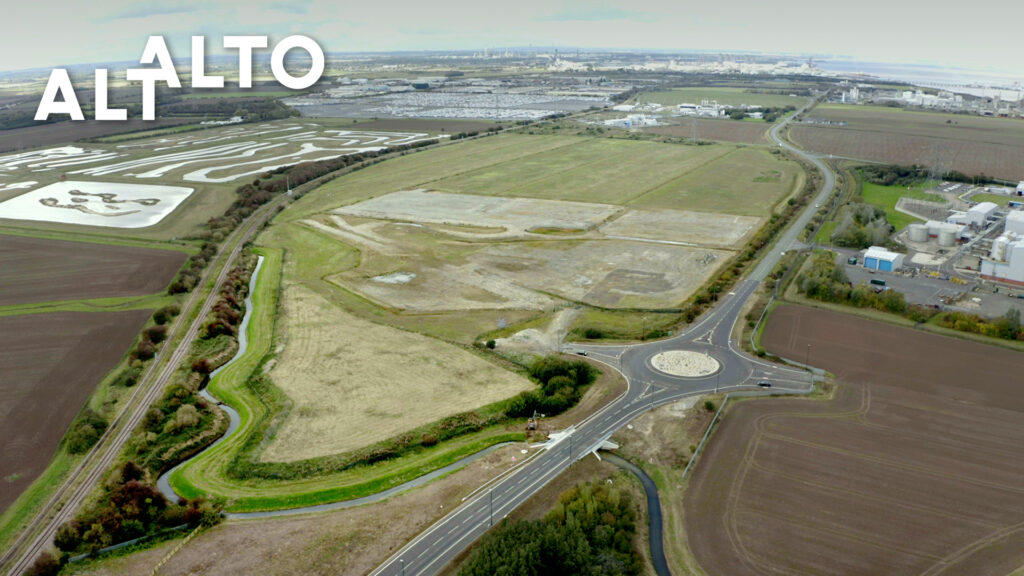
The site for the Altalto Immingham project
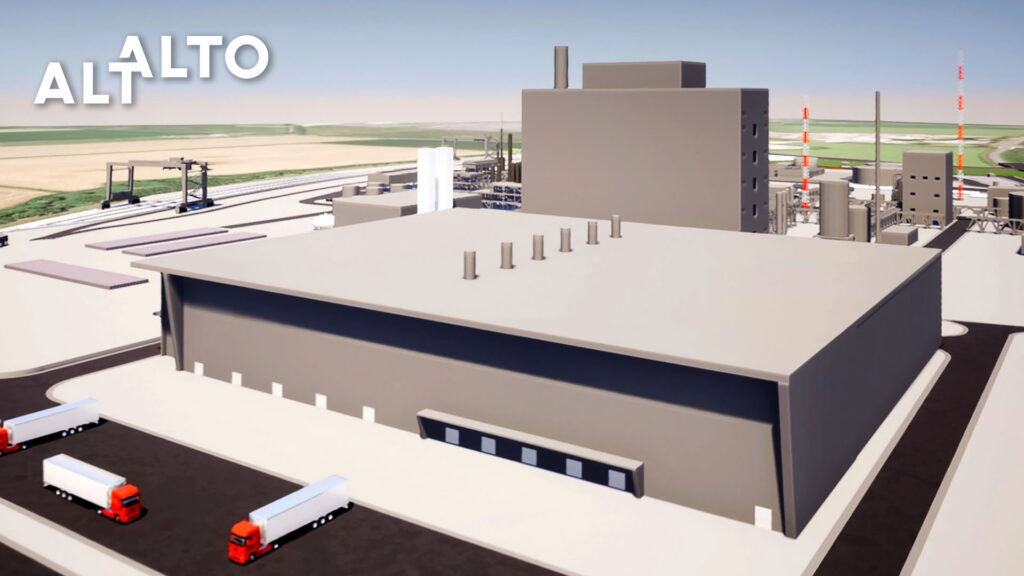
Visualisation of the Altalto Immingham project
12 February 2024 | Oxford, UK: Velocys, a leading sustainable aviation fuel (“SAF”) technology company, announces that it has begun a new chapter following the completion of its take-private on 18 January 2024. As part of the transaction, a new consortium of growth investors, including Carbon Direct Capital, Lightrock, GenZero and Kibo Investments, has infused Velocys with US$40 million of growth capital. The funds will be used to accelerate the delivery of Velocys’ proprietary technology to customer projects whilst further building its technology leadership, scaling its production and enhancing the breadth and depth of the team’s expertise.
Decarbonising aviation is a critical climate challenge given the 800 megatonne annual carbon footprint from airline travel.[1] Velocys expects demand for sustainable aviation fuel to accelerate given the confluence of regulatory support and higher readiness levels of drop-in fuel technologies. For instance, new European Union (“EU”) rules will require suppliers to ensure that 2% of fuel made available at EU airports is SAF in 2025, 6% in 2030, 20% in 2035 and 70% in 2050.[2] Airlines are also expected to drive the exponential growth in demand for SAF. In 2023, more than 490,000 flights were partially powered by SAF, from just 500 in 2016.[3]
Velocys is a technology company whose patented catalyst and micro-channel reactor platform provide a scalable, flexible solution particularly suitable for projects that produce SAF. Velocys’ Fischer-Tropsch technology is compatible with multiple project types employing diverse feedstocks, including municipal solid waste, woody biomass, and CO2 & green hydrogen, and has demonstrated performance at commercial scale. Velocys’ experience of integrating its technology into an overall scheme is highly valuable to clients, allowing them to maximise lifecycle carbon savings.
Velocys has invested to scale its reactor facility in Plain City, Ohio, to ensure a stable supply of reactors for delivery to SAF project owner-operators around the world. Velocys’ 52,500 square foot reactor facility will be able to produce an initial 12 reactors per year, which is the typical requirement for the operation of a commercial-scale SAF biorefinery. There are also plans to ramp up capacity of the facility as demand for SAF grows.
Henrik Wareborn will continue to lead Velocys’ management team as the Chief Executive Officer. The new ownership consortium – a global syndicate of climate investors focused on harnessing technology to accelerate decarbonisation – has combined expertise, networks, and specialist scaling support that will better equip Velocys to contribute meaningfully to the decarbonisation of the aviation industry.
Josh Dienstag, Chief Investment Officer of Carbon Direct Capital, said: “We believedrop-in fuels are the most promising, scalable solution to decarbonize aviation and to deliver climate impact the soonest. Velocys is a scarce supplier with the technology readiness, production capacity, and leadership team to deliver for SAF project partners. We are pleased to be part of this investor consortium and to support Henrik and the Velocys team.”
Kevin Bone, Partner at Lightrock, said: “We are delighted to be partnering with Velocys as it takes the next steps in its journey to becoming the leading provider of SAF solutions to the aviation industry. This critical objective requires long-term backing with the requisite experience of supporting industrial companies as they seek to realise their potential. I have no doubt that this consortium is best placed to do just that.”
May Liew, Investment Director at GenZero, said: “Decarbonising the global aviation industry will require innovative solutions that can be adopted with ease and at scale. This is where Velocys’ pioneering Fischer-Tropsch reactor is relevant, with its modularity and efficiency to support the development of advanced biofuel applications. By leveraging technology to transform waste materials into sustainable aviation fuel, Velocys is well positioned to play a key role in scaling the use of low-carbon fuels to pave the way towards net-zero aviation.”
Henrik Wareborn, Chief Executive Officer of Velocys, said: “The deal secures the future of Velocys, our pioneering technology and our industry leading talent, allowing us to keep our foot on the accelerator as we continue to lead the way in innovative sustainable aviation fuel solutions as we enter an inflection point for our industry. For the past twenty years Velocys has had a critical role in the development of reactors, technology and processes which enable the efficient production of lower carbon SAF, and we and our new partners are excited to see what the next twenty will bring.”
END
[1] https://www.iea.org/energy-system/transport/aviation
[2] https://www.reuters.com/business/aerospace-defense/airlines-look-sustainable-aviation-fuel-meet-carbon-targets-2023-11-28/#:~:text=SAF%20makes%20up%20only%20around,accounting%20for%2065%25%20of%20fuel.
[3] https://corporate.virginatlantic.com/gb/en/business-for-good/planet/fuel.html
Media Enquiries:
Sam Cartwright, sam.cartwright@h-advisors.global / +44 207 379 5151
Jonathan Cook, jonathan.cook@h-advisors.global
About Carbon Direct Capital
A new generation of transformative, growth companies has emerged from the carbon management ecosystem. Carbon Direct Capital partners with leading companies in this space. The firm believes that selective investing with a science-focused approach maximizes both climate impact and financial returns. Carbon Direct Capital is headquartered in New York City. For more information visit www.carbondirectcapital.com.
About Lightrock
Lightrock is a global impact investing platform that backs purpose-driven companies tackling the world’s biggest challenges. Lightrock funds invest in companies that pursue scalable and tech-driven business models around the key impact themes of people, planet, and productivity/tech for good. Lightrock’s portfolio includes more than 90 high-growth companies across Europe, US, Latin America, India, and Africa, supported by more than 105 Lightrock professionals based in 6 global offices. Lightrock is backed by LGT, the international private banking and asset management group, and other leading global institutions. For more information, please visit www.lightrock.com
About GenZero
GenZero is an investment platform company focused on accelerating decarbonisation globally. Founded by Temasek, we seek to deliver positive climate impact alongside long-term sustainable financial returns by investing in opportunities with the potential to be nurtured into impactful and scalable solutions.
Driven by a common purpose to decarbonise for future generations, we recognise the need for a holistic and integrated approach to achieve a net zero world. At GenZero, we adopt a flexible investment approach across three focus areas to drive climate impact: (i) nature-based solutions that help protect and restore our natural ecosystems while benefiting local communities and biodiversity; (ii) technology-based solutions that deliver deep decarbonisation impact; and (iii) carbon ecosystem enablers which refer to companies and solutions that support the development of an effective, efficient, and credible carbon ecosystem.
For more information on GenZero, visit www.genzero.co
About Kibo Investments
Kibo Investments is a Singapore-based private investment office with a focus on climate technology.
OHIO: Velocys, the sustainable fuels technology company, is delighted to announce the launch of its new 52,500 sq. ft technology facility in Plain City, Ohio that will house the reactor core assembly and catalysis operations which form a critical part of the production process for sustainable aviation fuel (“SAF”).
The new site enables the consolidation of Velocys’ catalysis services, microchannel reactor core assembly and technology licensing under one roof. The building’s construction began in mid-2022 and was finished by the end of the year with fit out completed over the winter.
Following the completion of an Enterprise Zone agreement signed with Union County and Jerome Township, Ohio, for a package of investment incentives and a grant received from JobsOhio, Velocys has already hired a number of senior personnel.
The Company is currently occupying the space with 20 employees and installing equipment which is expected to be fully commissioned for production from mid-2024. Eventually the facility will house approximately 35 employees when in full production.
The new site has the capacity to produce approximately 48 cores per year, enough to support 12 reactors which is the typical requirement for the operation of a single commercial scale SAF biorefinery, with a capacity to convert approximately 1TWh per year of energy.
It is expected that the facility will have sufficient production capacity to meet projected orders until 2028, including those from Velocys’ two biorefinery reference projects – Bayou Fuels, Mississippi and Altalto, Immingham, UK.
As part of a 15 year lease agreement, Velocys contributed $2m towards the construction with the remaining $8m being contributed by the developer, Warner Industrial Corporate Centers 2 LLC, a subsidiary of Ohio-based developer, The Pagura Company.
The launch event will take place at 10.00am local time on Tuesday 24 October, 8520 Warner Road, Plain City, Ohio 43064 in the presence of Velocys executives, clients, board members, local stakeholders and colleagues.
Henrik Wareborn, Velocys CEO, said: “The completion of this state of the art facility is a real milestone both for Velocys and for the move to decarbonise the aviation industry. It is another critical piece in the jigsaw to go alongside the support we are receiving from regulatory and policy initiatives in all of our core markets. I would like to offer my thanks to the State of Ohio along with the many contractors who have completed this project in such a short time frame. To move from planning permission to completion in two years is a testament to all those involved and takes us a big step closer to enable our clients to produce SAF with ultra-low carbon intensity at commercial scale.”
To attend the launch or request interviews and imagery please contact:
Rae Baker / rae.baker@velocys.com
About Velocys
Velocys is an LSE-listed, international sustainable fuels technology company, traded on the AIM, providing customers with a technology solution to enable the production of negative Carbon Intensity synthetic, drop-in fuels from a variety of waste materials. Synthetic fuel is the only commercially available, permanent alternative to fossil aviation fuels. The Velocys technology is IP-protected in all major jurisdictions.
Two reference projects (Bayou Fuels, US, and Altalto Immingham, UK) are designed to accelerate the adoption and standardise the Velocys proprietary Fischer Tropsch (“FT”) technology with an integrated end to end solution, including renewable power and carbon sequestration.
Velocys is enabling commercial scale synthetic fuel production in response to the clean energy transition, with significant additional positive air quality impacts.
Velocys, the sustainable fuels technology company, is please to announce its interim results for the six months ended 30 June 2023.
Velocys, the sustainable fuels technology company, is pleased to announce its unaudited preliminary results for the year ended 31 December 2022 (“FY22”).
Velocys plc (VLS.L), the sustainable fuels technology company, is pleased to announce that further to the award of the grant from the UK Government’s Department for Transport (“DfT”) Advanced Fuel Funds of up to £27 million for the Altalto Immingham Sustainable Aviation Fuel (“SAF”) Project, announced on 12 December 2022, Altalto Ltd* has completed the work necessary to claim the first tranche (£7 million) of the grant up to 31 March 2023. In addition, as planned, the project has obtained the first tranche of private funding for the period from 1 April 2023 from its existing private sector participants.
The Altalto project’s aim is to deliver a commercial waste-to-SAF plant in Immingham, UK. The DfT grant and matched funding will enable Altalto to complete the Front-End Engineering Design (“FEED”) stage of the project. Following the completion of FEED and a successful final investment decision, construction will commence in 2025 with full commercial operation expected in 2028.
Since the award of the DfT grant in December, the Altalto Immingham Project has entered into a number of technology license and engineering services agreements with project technology licensors and the FEED contract with Bechtel Limited, utilising the first tranche of grant funds provided by the DfT. Pursuant to the terms of the grant, further draw down of the grant is subject to demonstration of project milestones with matched funding requirements to be met over the two years to 31 March 2025.
In March 2023, the Company announced the appointment of a leading global investment bank to advise on the financing of Velocys’ Reference Projects and to assist in obtaining the matched funding from private sector investors, which is on track to be in place during Q4 2023.
As previously announced, Velocys’ cash contribution to the Altalto Project over two years from April 2023, including its contribution to the first tranche of private funding of £1 million, is not expected to exceed £8 million, with Velocys intending to recover any funding it provides at the earlier development stages (as from 1 April 2023 onwards) following receipt of third party project investment.
* a wholly owned subsidiary of the Company.
This announcement contains inside information for the purposes of the UK Market Abuse Regulation.
For further information, please contact:
Velocys
Henrik Wareborn, CEO
Philip Sanderson, CFO
+44 1865 800821
Panmure Gordon (UK) Limited (Nomad and Joint Broker)
Hugh Rich (Corporate Broking)
Emma Earl (Corporate Finance)
John Prior (Corporate Finance)
+44 20 7886 2500
Shore Capital Stockbrokers Limited (Joint Broker)
Henry Willcocks (Corporate Broking)
Toby Gibbs (Corporate Advisory)
James Thomas (Corporate Advisory)
+44 20 7408 4090
Radnor Capital (Investor Relations)
Joshua Cryer
Iain Daly
+44 20 3897 1830
Buchanan (Financial PR)
Helen Tarbet
Simon Compton
+44 20 7466 5000
— Ends —
Notes to Editors
Velocys is an LSE-listed, international sustainable fuels technology company, traded on the AIM, providing customers with a technology solution to enable the production of negative Carbon Intensity synthetic, drop-in fuels from a variety of waste materials. Synthetic fuel is the only commercially available, permanent alternative to fossil aviation fuels. The Velocys technology is IP-protected in all major jurisdictions.
Two reference projects (Bayou Fuels, US, and Altalto Immingham, UK) are designed to accelerate the adoption and standardise the Velocys proprietary Fischer Tropsch (FT) technology with an integrated end to end solution, including renewable power and carbon sequestration.
Velocys is enabling commercial scale synthetic fuel production in response to the clean energy transition, with significant additional positive air quality impacts.
Velocys plc (VLS.L), the sustainable fuels technology company, welcomes yesterday’s consultation paper from the UK Government which contains a number of proposals aimed at supporting and financing the development of the sustainable aviation fuel (“SAF”) industry. Velocys believes this will help to support the further development of its UK reference project, Altalto Immingham and other UK pipeline opportunities, building on the recent UK government grants awarded from the Advanced Fuel Fund.
The Government has confirmed its desire to establish the UK as a global leader in the development, production and use of SAF by creating secure and growing SAF demand, kickstarting a domestic SAF industry and working in partnership with industry and investors to build long term supply. Yesterday’s consultation comes amid growing support for decarbonisation and further supports the UK Government’s ambition of reaching net zero by 2050 and its Jet Zero strategy. The Gasification plus Fischer Tropsch (FT) process has been identified as the main pathway to sustain SAF uptake to 2030 and beyond. Velocys’ patented FT process is well positioned to fulfil this demand.
The proposed SAF mandate offers a guaranteed level of demand and creates a long-term requirement to supply SAF, provides incentives to SAF producers in the form of tradeable certificates and signals the vital role SAF will play in the future of UK aviation. The tradable certificates are intended to close the gap between the cost of jetfuel and the cost of SAF, with additional certificates awarded in proportion to avoided carbon dioxide emissions.
The proposals in this consultation will help support the ongoing development and financing of the Company’s Altalto Immingham reference project. As announced in December 2022, Altalto Immingham was awarded £27 million from the Department for Transport’s Advanced Fuel Fund to support Front End Engineering Design, the final engineering phase required prior to construction, subject to matched funding.
Due to begin commercial operation in 2028, the biorefinery is expected to be one of the first commercial scale waste-to-jet fuel facilities in the UK. It will convert over half a million tonnes per day of commercial, industrial and municipal solid waste into 20 million gallons per year of sustainable fuel, with an overall lifecycle emissions saving of more than 300,000 tonnes carbon dioxide per year, equivalent to taking 140,000 cars off the road.
Henrik Wareborn, CEO, said: “Velocys’ technology is immediately ready to support commercial scale production of SAF with ultra-low carbon intensity and input from a range of feedstocks.
“There is a clear groundswell of legislative and policy support for the use of sustainable aviation fuel with the Inflation Reduction Act in the US, the ReFuelEU initiative in Europe and now today’s news from the UK. This level of government support is critical, so that industry and policy can work in parallel and at speed to reduce emissions. There is still a need for a clear mechanism to ensure price stability for SAF, but the proposed mandate is an important step in the right direction.
“Today’s news further underpins the investment case for our Altalto reference project in Immingham. The project will put the UK firmly at the forefront of the global move to decarbonise the aviation sector.”
For further information, please contact:
Velocys
Henrik Wareborn, CEO
Philip Sanderson, CFO
+44 1865 800821
Panmure Gordon (UK) Limited (Nomad and Joint Broker)
Hugh Rich (Corporate Broking)
Emma Earl (Corporate Finance)
John Prior (Corporate Finance)
+44 20 7886 2500
Shore Capital Stockbrokers Limited (Joint Broker)
Henry Willcocks (Corporate Broking)
Toby Gibbs (Corporate Advisory)
James Thomas (Corporate Advisory)
+44 20 7408 4090
Radnor Capital (Investor Relations)
Joshua Cryer
Iain Daly
+44 20 3897 1830
Buchanan (Financial PR)
Helen Tarbet
Simon Compton
+44 20 7466 5000
— Ends —
Notes to Editors
Velocys is an LSE-listed, international sustainable fuels technology company, traded on the AIM, providing customers with a technology solution to enable the production of negative Carbon Intensity synthetic, drop-in fuels from a variety of waste materials. Synthetic fuel is the only commercially available, permanent alternative to fossil aviation fuels. The Velocys technology is IP-protected in all major jurisdictions.
Two reference projects (Bayou Fuels, US, and Altalto, UK) are designed to accelerate the adoption and standardise the Velocys proprietary Fischer Tropsch (FT) technology with an integrated end to end solution, including renewable power and carbon sequestration.
Velocys is enabling commercial scale synthetic fuel production in response to the clean energy transition, with significant additional positive air quality impacts.
Velocys plc (VLS.L), the sustainable fuels technology company, is pleased to announce that it has completed the appointment of a leading global investment bank to advise it on the financing of its two key technology reference projects; the Bayou Fuels project in Natchez, Mississippi, and the Altalto Immingham project in the UK.
Henrik Wareborn, CEO, said:
“Following the recent announcement of our master relationship agreement with Bechtel, today’s announcement further supports the acceleration of our commercial and strategic vision for Velocys.”
For further information please refer to the Notes to Editors or please contact:
Velocys
Henrik Wareborn, CEO
Philip Sanderson, CFO
+44 1865 800821
Panmure Gordon (UK) Limited (Nomad and Joint Broker)
Hugh Rich (Corporate Broking)
Emma Earl (Corporate Finance)
John Prior (Corporate Finance)
+44 20 7886 2500
Shore Capital Stockbrokers Limited (Joint Broker)
Henry Willcocks (Corporate Broking)
Toby Gibbs (Corporate Advisory)
James Thomas (Corporate Advisory)
+44 20 7408 4090
Radnor Capital (Investor Relations)
Joshua Cryer
Iain Daly
+44 20 3897 1830
Buchanan (Financial PR)
Helen Tarbet
Simon Compton
+44 20 7466 5000
Notes to Editors
Velocys is an LSE-listed, international sustainable fuels technology company, traded on the AIM, providing customers with a technology solution to enable the production of negative Carbon Intensity synthetic, drop-in fuels from a variety of waste materials. Synthetic fuel is the only commercially available, permanent alternative to fossil aviation fuels. The Velocys technology is IP-protected in all major jurisdictions.
Two reference projects (Bayou Fuels, US, and Altalto, UK) are designed to accelerate the adoption and standardise the Velocys proprietary Fischer Tropsch (FT) technology with an integrated end to end solution, including renewable power and carbon sequestration.
Velocys is enabling commercial scale synthetic fuel production in response to the clean energy transition, with significant additional positive air quality impacts.